

Turiya - The Fourth Dimension
Three states of consciousness & beyond - the fourth factor

I first came across this concept in Śrī Caitanya-caritāmṛta, however, its various relevances became clearer later through reading texts such as the Māṇḍūkya Upaniṣad and others.
Four levels of consciousness
The Māṇḍūkya Upaniṣad describes turīya as the fourth level of consciousness:
Awake state (jāgrat)
Dream state (svapna)
Deep sleep (suṣupti)
Transcendental reality (turīya)
In the waking state, the intelligence, mind, and senses are active.
In the dream state, the subtle senses and mind are active, while the intelligence functions only partially.
In the deep sleep state, neither the senses, intelligence, nor even the mind is active; only the false ego remains in a seed form. In that state, one experiences a kind of peaceful, blissful ignorance. Free from the pushings of the mind and senses, one experiences a reflection of bliss—a type of relief that is pleasurable. However, due to the covering of ignorance, there is no real knowledge, only the recollection upon waking: “I slept well.”
However, the fourth factor is that of transcendence, beyond the influence of the material mind, subtle senses, and intelligence. It is the fully awakened awareness of the self and its eternal relationship with the Supreme Lord.
Turīya is not merely a state within material consciousness, but the transcendental reality beyond it. It points to the Supreme Lord, who exists beyond the three states, as well as to the liberated condition of the living entity when that relationship is realized. In this sense, it is reality unveiled in its complete form.1
The Māṇḍūkya Upaniṣad further explains that the fourth element of Oṁ, the nāda, signifies the Lord.
The Fourth continued
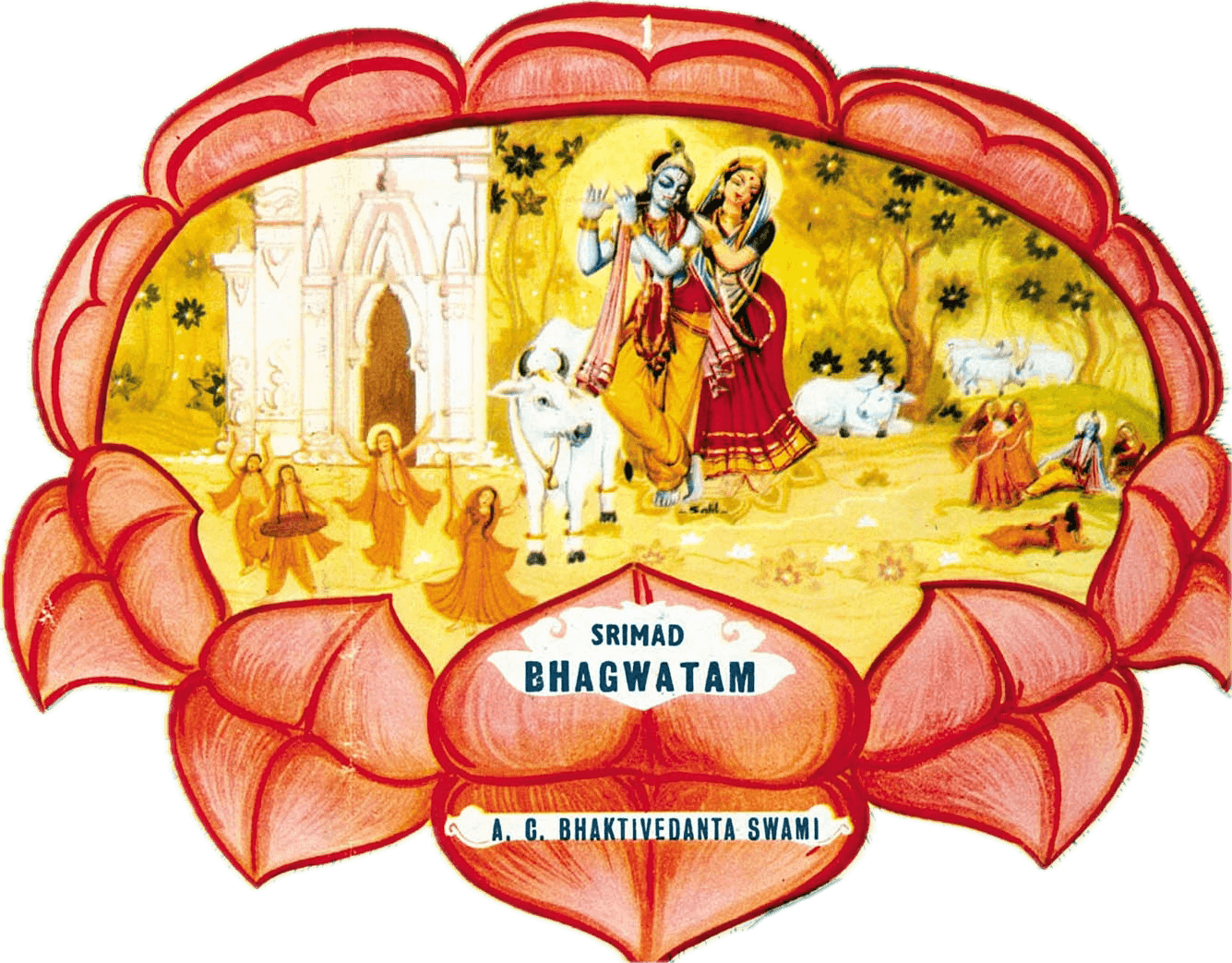
The Fourth beyond the Puruṣas
This fourth factor is reiterated in various ways. Krishna is described as turīya because unlike the three Puruṣa avatāras—Kāraṇodakaśāyī Viṣṇu, Garbhodakaśāyī Viṣṇu, and Kṣīrodakaśāyī Viṣṇu—who expand to interact with material creation, Krishna remains completely aloof from any involvement with matter, simple by his desire, all material affairs are put to order. 2
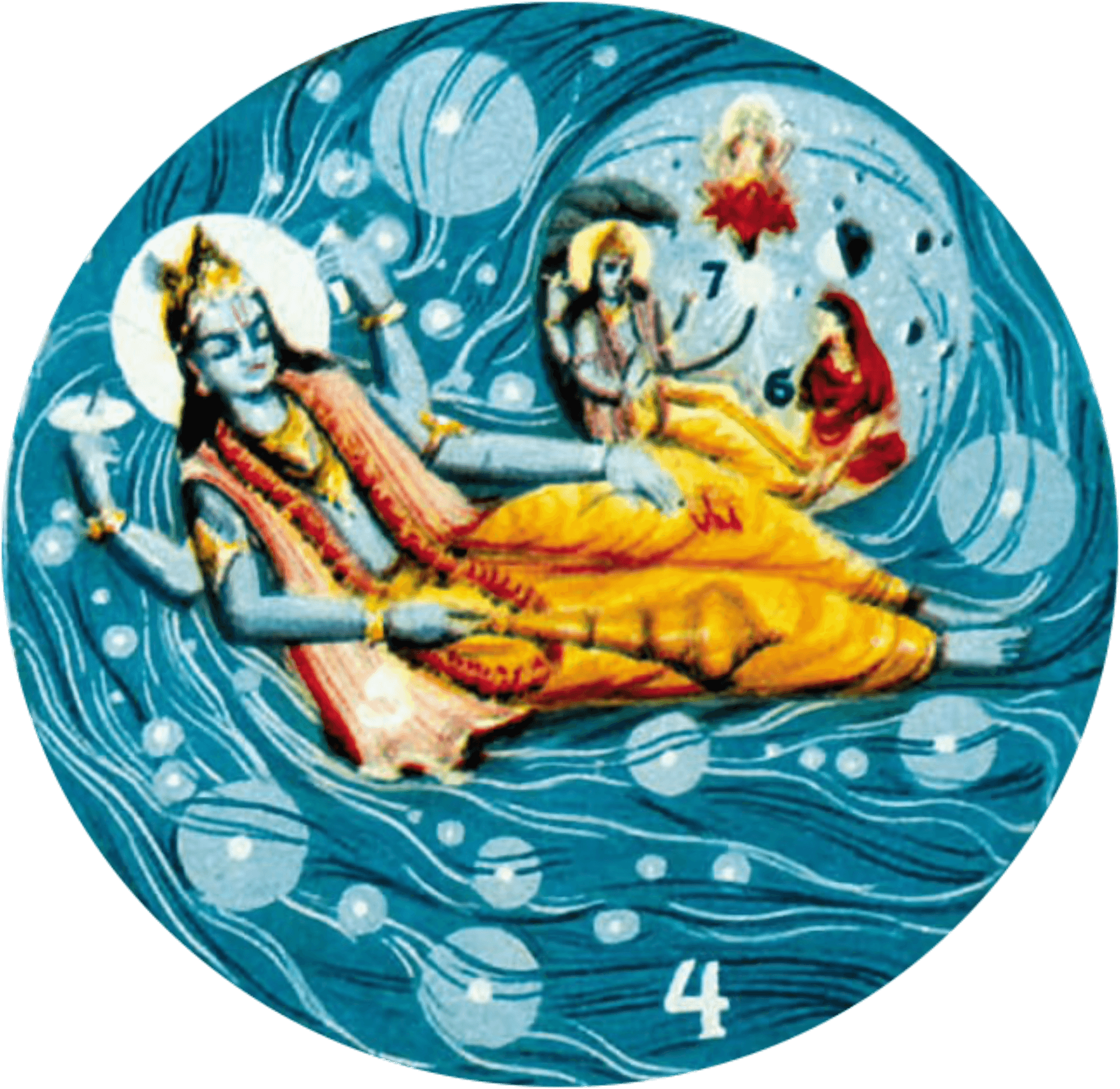
The fourth beyond the guṇas
Krishna is thus the “fourth factor” because He is beyond the three guṇas, situated in pure existence (viśuddha-sattva).
Beyond dimensions, platforms, planets…
Krishna and His abode are described as beyond material dimensions, which are measured by length, breadth, and height.3
Śrīla Bhaktisiddhānta Sarasvatī Ṭhākura says that Krishna is turīya because he is ‘beyond the three platforms, the physical, mental, and intellectual.’
Some commentators state that Krishna is turīya, the fourth, because he is beyond worlds, the upper, middle, and lower planetary systems. The lord beyond—Tribhuvānatha.
Beyond us?
It is a very fascinating subject. However, upon hearing how beyond and transcendental the Lord is, one may begin to feel some distance. Krishna very beautifully expresses his heart in Bhagavad Gītā’s chapter 9. How he is captured and moved by simple love. This simple truth is so powerful that it seems to bend reality, as a powerful black hole bends the very fabric of time and space. Krishna states that He is neutral and equal to all, but simple heartfelt love, being so powerful, starts to bend that reality, for the Lord becomes partial, bent towards those who love and depend upon him. Fear not, philosophers, for this is not a fault in the Lord’s character; it is one of his most beautiful qualities.
May the Fourth be with you, my friend.
Hare Kṛṣṇa
See some of my other articles


Māṇḍūkya Upaniṣad, Turīya, the fourth - https://www.ccdas.net/p/mandukya-upanisad
“Superficially we see that these puruṣas have a relationship with māyā, but above them, in the fourth dimension, is Lord Kṛṣṇa, who has no contact with the material energy.
The three puruṣas — Kāraṇodakaśāyī Viṣṇu, Garbhodakaśāyī Viṣṇu and Kṣīrodakaśāyī Viṣṇu — all have a relationship with the material energy, called māyā, because through māyā They create the material cosmos. These three puruṣas, who lie on the Kāraṇa, Garbha and Kṣīra oceans respectively, are the Supersoul of everything that be: Kāraṇodakaśāyī Viṣṇu is the Supersoul of the collective universes, Garbhodakaśāyī Viṣṇu is the Supersoul of the collective living beings, and Kṣīrodakaśāyī Viṣṇu is the Supersoul of all individual living entities. Because all of Them are somehow attracted to the affairs of the material energy, They can be said to have some affection for māyā. But the transcendental position of Śrī Kṛṣṇa Himself is not even slightly tinged by māyā. His transcendental state is called turīya, or the fourth-dimensional stage.” CC Ādi 2.52
“The Supreme Personality of Godhead is by nature joyful. His enjoyments, or pastimes, are completely transcendental. He is in the fourth dimension of existence, for although the material world is measured by the limitations of length, breadth and height, the Supreme Lord is completely unlimited in His body, form and existence. He is not personally attached to any of the affairs within the material cosmos.” - CC Ādi 2.18
I feel a sense of "aha! So *that's* what the fourth factor is!" and what a profound and beautiful significance. I love this comparison to the black hole and the "bending" of reality to make space for Krishna's love. And of course, what a perfect post for May the 4th ;)